10 Common Resume Mistake : How to Avoid It
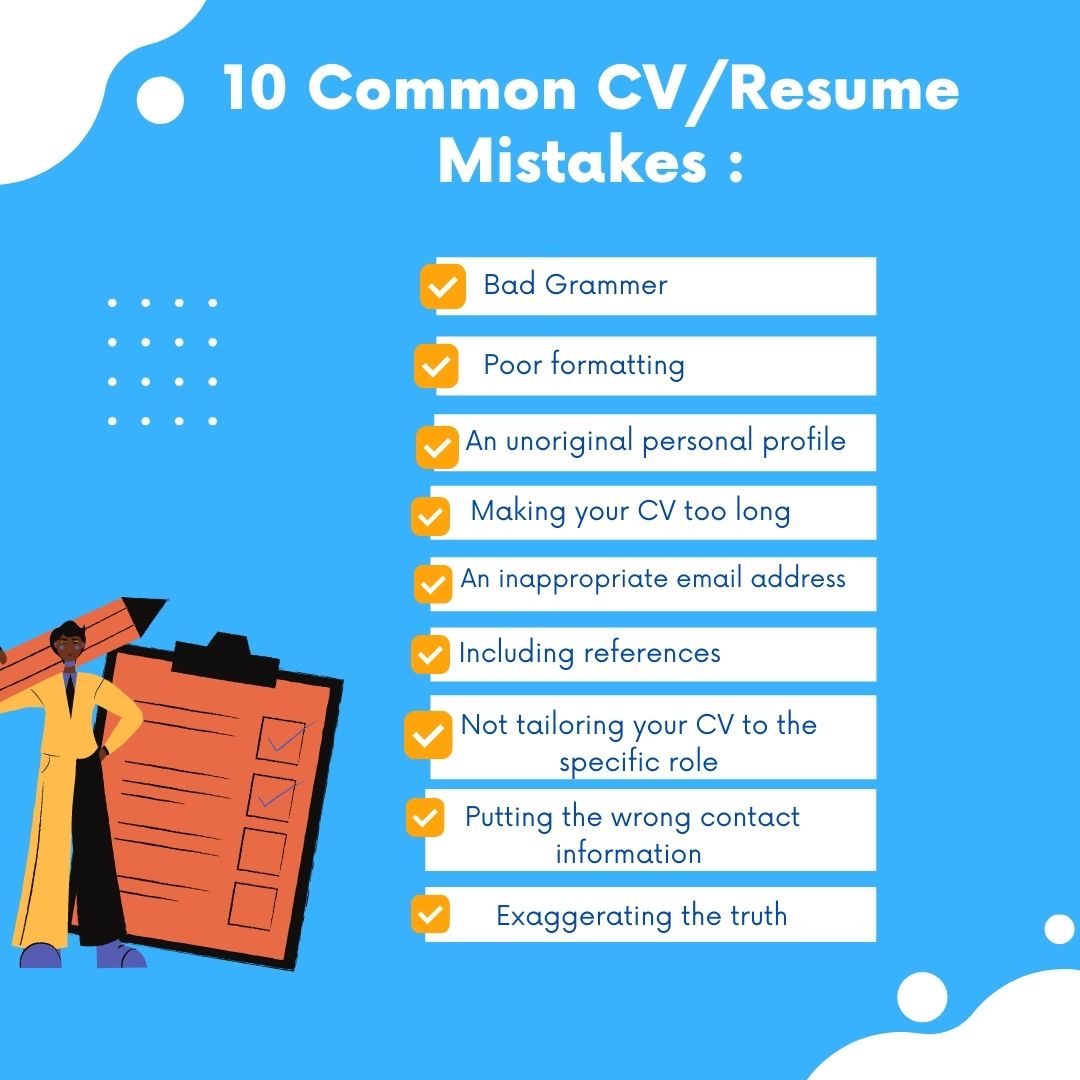
Your resume, which highlights your abilities, successes, and experience, is an essential tool in your job hunt. Making a mistake when writing your resume, however, can make it more difficult for you to land an interview. Here are 10 CV blunders you should steer clear of:
- Using an old or unprofessional email address on your resume: Be sure to use a professional email address on your resume, such as your name or a name and a number combination. Use appropriate email addresses; do not use inappropriate or amusing ones since they could give the wrong impression to prospective employers.
- Including unneeded or irrelevant information: Focus on the position you're applying for and make sure your CV reflects that. Political opinions or personal interests are examples of irrelevant or superfluous information that should be avoided because they could detract from your qualifications.
- Not modifying your resume to fit the position: It's crucial to modify your resume for the particular position you're applying for. Be sure to include specific examples and showcase your accomplishments and talents that are most pertinent to the post.
- Including too little or too much information: A resume shouldn't be more than one or two pages long, and it should be brief and to the point. A reader who is overwhelmed by information should not be given too much information. On the other hand, avoid leaving too much blank space on the page or omitting crucial information.
- Use a clean, professional typeface and layout: for your resume instead of one that isn't. Make careful to utilize consistent formatting throughout the document and refrain from choosing too decorative or difficult-to-read typefaces.
- Including mistakes or typos: Carefully proofread your resume to make sure it is error- and typo-free. A single error might leave a bad impression on prospective employers.
- Avoid employing ambiguous or overused keywords in your writing, such as "team player" or "results-driven," as they may not be clear to the reader. Instead, give concrete instances to support your abilities and achievements.
- Not giving enough information: While it's vital to keep your resume brief, make sure to provide the reader enough information to fully comprehend your talents and expertise. Use concrete examples to highlight your accomplishments and the value you added to your previous employment rather than just listing your work responsibilities.
- Not employing action verbs: On your CV, describe your abilities and accomplishments using action verbs. "Achieved," "developed," and "executed" are some examples. Making your resume more dynamic and interesting for the reader by using action verbs.
- Exaggerating or lying: It's critical to be truthful on your resume. Exaggerating or lying about your abilities or expertise might be quickly discovered throughout the employment process, which can harm your credibility.
You may write a polished, effective resume that will make you stand out to potential employers by avoiding these frequent blunders.
All Blog Categories
Recent Blogs
-
How to Apply for a Job Professionally in Nepal | CV Sending...
Published at: 2025-12-01
-

Top Jobs in Nepal You Shouldnt Miss (2025)
Published at: 2025-11-10
-
Internship & Trainee Vacancy in Kathmandu Nepal | SliceJob Career Opportunities
Published at: 2025-10-17
-

Why Soft Skills Matter More Than Ever in Todays Job Market
Published at: 2025-10-10
-

How SliceJob Helps Job Seekers Find the Right Career Path
Published at: 2025-09-24
-

Grow Your Career in Edu-Consultancy: Counsellor, CSR & Documentation Jobs
Published at: 2025-09-16
-

Latest Job Vacancies in Kathmandu, Nepal | SliceJob
Published at: 2025-09-07
-

Discover Top Hospitality & Restaurant Jobs in Kathmandu
Published at: 2025-09-03